Category: News

ukeff-logo-site

UKeff AGM

We had our AGM a little late this year but we were completely blown away by the stats and the amount of support that UKeff Volunteers have managed to offer in just 12 months.

This clearly shows that grass root organisations like UKeff are often unrecognised for the vital support they give tirelessly to their service users, these very same services users then become part of the family and start giving back to their community.

Take a read of the full report below:

Over 60k Meals in just 2018

Saved the tax payer over nearly £75k in salaries

Over 1500 service users..

Click Here to View report


Zakat-Story-768×543

Zakat removed Poverty?

The potential of Zakat as a source of poverty eradication is optimistic and positive. However, the gulf between theory and reality can often be significant. In South and South East Asia, this gulf unfortunately exists. Zakat implementation has had limited success and suffers from significant inefficiency. The woes of modern day Zakat are in stark contrast to the success of Umar bin Abdul-Aziz, who is oft-mentioned as the poster child of Zakat success. Historical accounts show that there was a surplus of Zakat funds during his reign i.e. there was so little poverty, that Zakat eligible recipients were scant (As-Sallabi, 1999, p574).

This article will discuss the success of Umar bin Abdul-Aziz in implementing Zakat, and using it to substantially reduce poverty. A brief introductory note will be given about Umar bin Abdul-Aziz, followed by a discussion of three factors which contributed towards his success; trustworthiness of Umar as an encouragement to pay Zakat, local distribution of funds, and using funds to develop productive capacities.

A brief definition is as follows; Zakat is mandatory alms-giving, to be taken from those who hold more than a minimum threshold of assets over a lunar year, and to be given to the poor and needy.

Who was Umar bin Abdul-Aziz?

Umar bin Abdul-Aziz succeeded Sulayman bin Abdul-Malik as the caliph of the Muslims in the 99th year of the Islamic calendar until his death in 101 AH (As-Sallabi, 1999, p102-109). His rule was remarkable, with many referring to him as one of the Rightly Guided Caliphs (As-Sallabi, 1999, p49), a group bearing the gold standard of early Muslim leaders, including Abu Bakr As-Siddiq, Umar ibn Khattab, Uthman ibn Affan and Ali ibn Abi Talib. During his rule, he navigated through theological and political controversies, including the Kharijite uprising (As-Sallabi, 1999, p281-197).

Indeed, his talents stretched beyond the spheres of leadership and politics; Umar was a mujtahid (an issuer of Islamic legal rulings), and a hafiz (one who has memorized the entire Qur’an, verbatim) (p48). As-Sallabi’s (1999) biography of Umar is gushing with praise over this piety, character and conduct.

The most significant praise given to Umar, is that he was is regarded as the first Mujaddid (Reviver) of Islam; that is to say, scholars regard him as the first of those to fulfil the following hadith: ‘Allah will raise for this community at the end of every hundred years the one who will renovate its religion for it’ (Sunan Abu Dawud). As-Sallabi (2010, p204) states that this is at least partly a result of exerting his capacity as caliph to rejuvenate the Muslim community.

Given the magnanimous praise heaped upon Umar, perhaps it is no surprise that his implementation of Zakat is seen as paragon in Islamic history.

The success of Umar bin Abdul-Aziz

Historical accounts show that there was a surplus of Zakat funds during his reign i.e. there was so little poverty, that Zakat eligible recipients could not be found (As-Sallabi, 1999, p574). To add nuance to this account, total poverty eradication might not have happened; in the absence of fast communication and travel, there likely were some people who were poor enough to receive Zakat, but were not found. At any rate, significant poverty reduction was achieved. There are a number of factors that can be attributed to this successful implementation. They are; Umar’s commitment to justice and fairness as encouragement for people to pay Zakat; the emphasis upon local distribution of funds; and using Zakat funds for building productive capabilities.

First is the remarkable commitment to justice and fairness of Umar. He was first made Caliph by the previous Caliph, Sulayman bin Abdul-Malik. His first act as Caliph was to impeach himself. Umar insisted that he would only be Caliph if the people voted for him, which they did (As-Sallabi, 1999, p106). It is argued that the unwavering commitment to justice, and renowned piety of Umar caused a strong relationship of trust between himself and Zakat payers (As-Sallabi, 1999). This was in stark contrast to previous leaders who had misused Zakat funds. As such, they very willingly gave Zakat to officials who Umar deemed as trustworthy. This would be crucial in reducing poverty. Contemporary studies show that if everyone were to pay their Zakat in particular Muslim countries, absolute poverty would be significantly reduced, or even eradicated (Islamic Social Finance Report, 2014). However, actual mobilisation of Zakat funds is particularly low. In this respect, Umar’s commitment to fairness was a factor which reduced the gap between actual and potential Zakat funds. From this we can garner that trustworthiness of a Zakat institute is crucial to encourage people to pay Zakat.

The second factor contributing to Umar’s success is his emphasis on local distribution of Zakat funds. Umar instructed Zakat officials to distribute the funds in the areas in which they were collected, unless there was a greater need elsewhere, which would be determined by the leadership and not by the donors. The personal knowledge that would accompany a localised distribution of Zakat is indeed a powerful thing; Friedrich Hayek, John Maynard Keynes’ intellectual rival, argued in defence of market forces, that individuals are best placed to spend their own money and make their own decisions. He argued this based upon an individual having access to ‘knowledge of the particular circumstances of time and place’. Such knowledge, Hayek contends, is by its nature unquantifiable and inexpressible to other parties. Hayek further argues that this particular type of knowledge constitutes most of the sum of total knowledge. It follows then that the State, when compared to the individual, would have far less information to make a decision. As such, the individual is best placed to make their own decisions (Hayek, 1945). Apply the same reasoning to Zakat; an individual could potentially have superior knowledge of where best to use Zakat in a locality, as compared international charities and NGOs. Intimate knowledge of a community and its needs could perhaps lead to better usage of Zakat funds. Although Hayek’s argument is not without its flaws, the broad notion of localised distribution of Zakat bettering its poverty alleviation capabilities by virtue of local information is a salient point. In this regard, Umar’s insistence upon local distribution meant that Zakat funds were utilised in a more efficient way.

Thirdly, the way Zakat funds were used was also a major success factor. The focus was upon encouraging agriculture and general productive capacity. This contributed towards an increase in income, causing more to be eligible for paying Zakat, and less people eligible to receive Zakat. As such Zakat revenues increased (As-Sallabi, 1999, p574). Economic theory also supports the focussing upon agriculture as a starting point of economic development. The Lewis Model of Development argues that the process of economic development is contained within the movement of workers from agriculture to industry. However, before this can happen, the agricultural sector must be sufficiently productive, so as to create a surplus of food. When a surplus of food exists, an economy will tend towards developing manufacturing goods (Lewis, 1954). However, the Lewis Model was developed in the late 1950s, so applying it to such a distant era will certainly not yield the crisp results that the model predicts. We can however use the Lewis Model as a line of reasoning; by bettering agricultural capacity, Umar created scope for individuals to move beyond subsistence, into more productive economic activity, thereby reducing poverty.

In summary, the trustworthiness of Umar, local distribution of funds, and emphasis upon agriculture and productive capacity were significant success factors in determining the success of his Zakat implementation.

Concluding remarks

Umar bin Abdul Aziz, the caliph who is regarded as the first Mujaddid of Islam, is said to have eradicated absolute poverty during his two-and-a-half-year reign. However, it is duly noted that it was the implementation of zakat since the time of Nabi SAW that led to the removal of poverty and not just the 2.5 years that Umar Bin Abdul Aziz was caliph. This article has attributed three factors to this; Umar’s justice and trustworthiness as an impetus for people to pay Zakat, the focus upon local distribution which increased the efficiency of distribution, and a using funds for developing agriculture and productive capacity. This is not an exhaustive set of factors; other factors have been omitted due to a lack of scope, such as the legal implementation of Zakat.

The case of Umar is an extremely optimistic and encouraging one; it shows the potency of Zakat. Perhaps then, the lack of similar success in today’s age in even more disappointing. The community of Islamic Financiers and thinkers need to pay deeper regard towards this problem; the academic literature on Zakat today is thin, eclipsed by concerns with other, arguably less important elements of Islamic Finance. But this lack of attention is shocking, given the scale of what Zakat can achieve, as is aptly demonstrated by the case of Umar. The Muslim community at large should intensify its efforts towards addressing this situation. Education, policy and academia should be lenses through which these efforts are channelled. But before any of that, Zakat should never be forgotten as a pillar of Islam, and as worship of God. Only when this is kept in mind will the Muslim community gain the fervour and zeal that is needed to implement Zakat as successfully as Umar did.

Bibliography

As-Sallabi, Ali Muhammad. Umar Bin ‘Abd-‘Aziz. London: Darussalam, 2015. Print.

Hayek, Friedrich. ‘The Use Of Knowledge In Society’. The American Economic Review 25.4 (1948): p519-530.

Lewis, W. Arthur. (1954). Economic Development with Unlimited Supplies of Labour. Manchester School, 22(2), pp.139-191.

Qaradawi, Yusuf. Fiqh Az-Zakat. London: Dar Al Taqwa, 1999. Print.

The Islamic Research and Training Institute,. Islamic Social Finance Report 2014. Zawya, 2014.

come-fast-for-charity-768×1086

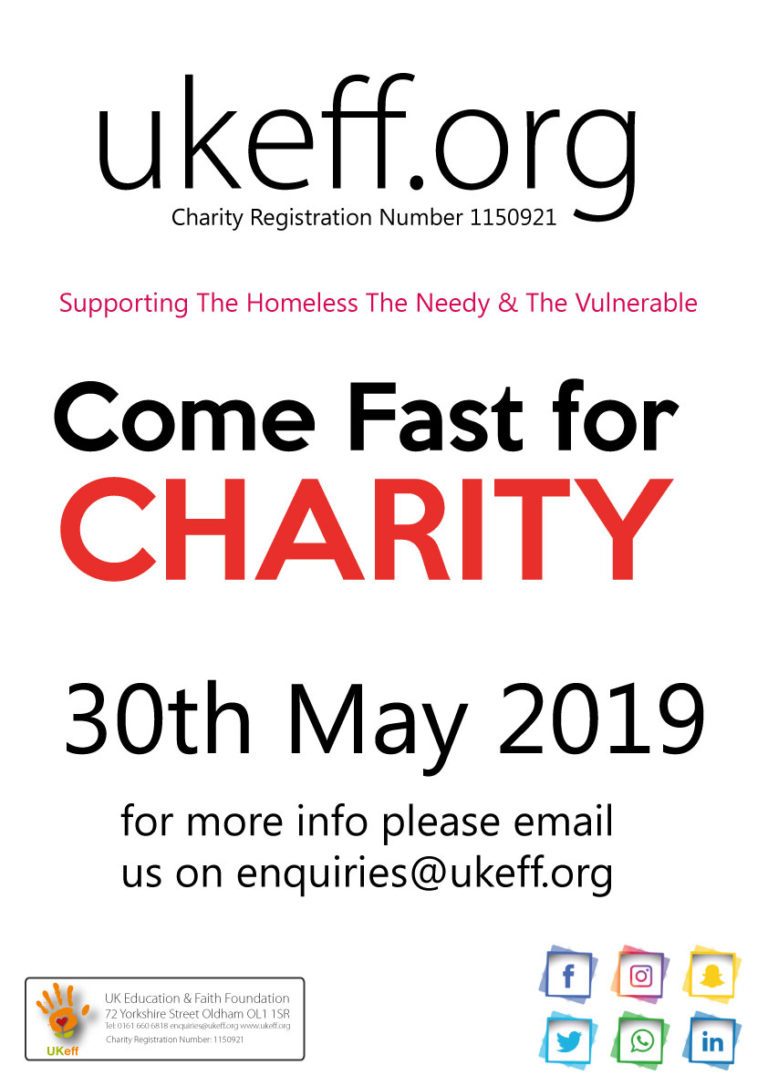
Come Fast For Charity

Last year we had Alex & Savanna fast for our charity to help the needy, the destitute and the homeless during the blessed month of Ramadhaan, these 2 superstars fasted for over 18 hours on the 31st May 2018, we welcomed them and broke fast together at around 9:45.

This year Alex and Savanna have managed to convince 22 of their colleagues who will be joining hands with UKeff to assist the poor who reside in our areas to fast for 18 hours on the 30th May 2019 and break fast with us in the evening.

This would involve posting photos and videos on social media throughout the day and encourage your friends family’s and loved ones to donate generously to UKeff.

Sounds like a challenge for you?

Why not join us by simply clicking on the link below to register today and we will send you all the details you need to assist you in creating a fantastic campaign JUST FOR YOU.

HERE IS THE LINK TO REGISTER 


ZAKAT1.1-768×460

Zakat A Local Issue

5th year running UKEFF are pleased to announce our Local Zakat Campaign, as charity begins at home, we have championed the local Zakat Campaigns throughout the uk bringing the focus back to our neighbours and people who reside within our locality and our reach.

Zakat has a purpose and that is to restore social balance, if your Zakat is not doing that, then its an exercise which has no fruit, please be mindful of your Zakats Duty to fulfil its purpose.

The Prophet Muhammad PBUH never sent his Zakat outside of the area, even whilst he sent many a people to other countries, yet always advocated the Zakat to stay local.

Please feel free to download our latest Zakat leaflet from here

You can pay your Zakat to UKEFF through our Zakat Page or by clicking here


ukeff-team-768×373

Exclusive Interview with Co-Founder of UK Education & Faith Foundation

With an aim to restore social harmony in the UK, UK Education & Faith Foundation (UKEFF) was founded in 2009.

Over the past decade, the group has had various initiatives focusing on communal cohesion and improved understanding between different sectors of the society.

On the side-lines of the 7th British Muslim Awards, which took place last month in the city of Bradford, About Islam interviewed the Muslim man who was not only a nominee but is one of the most inspiring figures in the UK. Nasim Ashraf Co Founder of UKEFF

AI: What inspired you to do what you do? Family, friends, general interest?

NA: In short, Muslim is a verb, a doing word, therefore, you must do if you dare to call yourself Muslim. It literally means (MUS-SLIM) Submitter to the system of Islam. Islam (Noun) is the system that the creator has sent to his creation in order to find peace and tranquility.

AI: To what extent does your religion define or contribute to what you do?

NA: Islam is not a religion but more a system and a complete way of life. This defines the characteristics of a Muslim (one who submits to it willingly and consciously to the system of Islam). Therefore, Islam has defined all the work we carry out in every single day of our lives. We have been defined and saluted at the House of Lords as the 4th Emergency service of Oldham.

AI: Can you give an example of a man or woman (doesn’t have to be a Muslim) who have shaped the way you think? What influence did they have on you?

NA: One of my great teachers (Sheikh Hafiz Ijaz) told me some years ago, that if you are not giving Islam, you are not living Islam. This is completely in line with the Ahadith of the Prophet Muhammad PBUH, that a Muslim is the one who benefits people around him, and from whose hands and tongue people are safe.

AI: Can you share a challenge you have faced and how you have overcome it?

NA: There are many challenges we face, from drugs and alcohol to victims of domestic violence to refugees and asylum seekers on a daily basis. The toughest challenge perhaps is when the authorities refused all forms of help and aid, yet we have intervened and had really effective results, not only securing help restored from the authorities, but also mobilizing the public to assist their neighbors regardless of their color, creed, or beliefs.

AI:  To what extent does the Muslim community influence you, if at all?

NA: The Muslim community has inspired me tremendously as we are without doubt not only the largest family on the globe but also the most generous.

AI: Can you share an example of how you have faced discrimination and how it was resolved? You can be as detailed or as vague as you like.

NA: I was published in 6 national newspapers and on several national and international TV channels. In 2017, I was presented as a radical Muslim with Conservative Islamic Values who tried to impose my Islamic values upon one of our local schools, this was handled calmly and collectively with a strategic angle, disproving all the allegations swiftly and winning against the Islamaphobic narrative. You can see my ITV interview here.

AI: Who is your favorite Muslim personality and your favorite non-Muslim personality, who are alive today?

NA: My Mother has to be my rock in every walk of life. She stood by and still does, not only does she believe in me, but she is always encouraging me to advance, despite the challenges. Alhamdulillah.

AI: If there is anything else you’d like to share feel free.

NA: The Glorious Qur’an states clearly that mankind will only achieve what he strives for in Surah 53:39. If we set our goals high, we will exceed even our own vision, but if we have a can’t do attitude, we will never achieve anything substantial. And whatever outcome on the night, by being shortlisted you are already a winner

The original article is available here

Visit-My-Mosque-6-768×593

Visit My Mosque Day

UKEFF This year took part in the National Visit My Mosque Day at the Oldham Greengate Street Mosque and was overwhelmed with messages of encouragement and support from the guests.

The Visit My Mosque is an initiative that has been running nationally for 5 years by MCB that has reached out to Mosques throughout Britain to take part and break down barriers and build strong relationships between people of Faith and no Faith, regardless of colour creed and background.

Ukeff over the last 10 years has been instrumental in devising positive projects like this and assisting mainstream institutes to take the first steps in reaching out to the public.

We can achieve much more when we are united as opposed to what we can achieve when we stand divided.


The-Muslim-Message1-768×444

UKEFF Finalists in British Muslim Awards

Nasim Ashraf a Rochdale Businessman who has been running his successful IT company (iiPlus) from Drake Street Rochdale since 2014 has been inundated with thousands messages of love and compassion for coordinating & bringing Mosques & Churches together all around Britain during last Years winter spell when temperatures plummeted, and opening the doors to the homeless, the lonely and the destitute, whilst serving them with emergency hot meals, emergency food parcels, a warm place to stay and a set of clean clothes.

So profound was this work that Nasim who is also the CO Founder of UKEFF, was invited to tell us why he did this live on BBC1 on Christmas Day from the Parish Church in Oldham, directly addressing Millions of Viewers all around the Globe he told the world how this is a direct instruction from the Almighty, you can watch the Muslim Message of Peace & Unity here.

UKEFF (UK Education & Faith Foundation has been running the Oldham Food Aid Hub in Oldham from The Unitarian Chapel for over 4 years on a self funded and self referral basis serving up to 150 people per week from Oldham, Rochdale and surrounding areas, the charity has also been recognised & saluted at the House of Lords, you can see the full report and article here.

Nasim has always maintained that Charity begins at home and we are the very fabric of Britain, he further explained that both his Grand Fathers were in the British Armed Forces in the second world war, therefore if this is not my country then where is? Our loyalty our struggle and our energy must be directed here on our doorstep to remove destitution and help the community in which we live in.

This was recently published in the Rochdale Online News you can read the article published here.

We thank everyone for their continuous support and prayers, without this UKEFF would not have been as successful as it has been.

Please continue to support us and lets unite against poverty in Britain.

5th-Anniversary-Invite-768×363

5 Years on

Press Release 14th January 2019

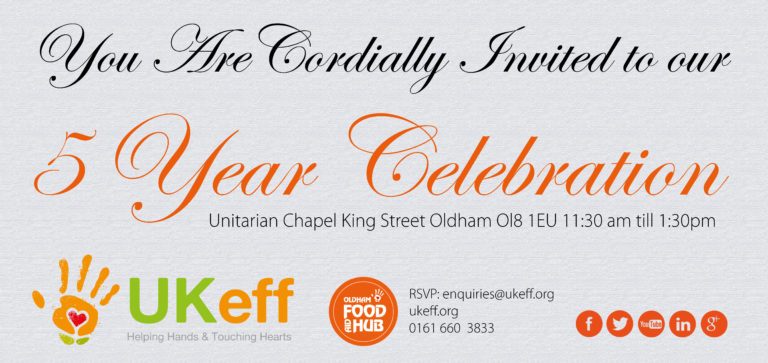
UK Education & Faith Foundation (UKEFF) Celebrate 5 years as a registered charity, On Sunday the 13th January 2019, UKEFF Celebrated their 5th anniversary of becoming a charitable organisation.

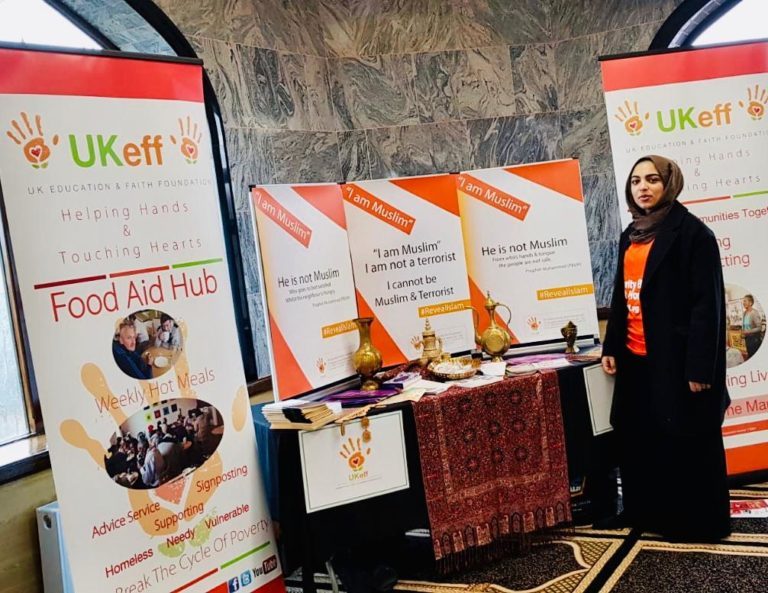
UKEFF primarily address the needs of the needy, vulnerable and homeless in Oldham and operate the Oldham Food Aid Hub in partnership with The Unitarian Church on King Street in the town centre every single Monday between 10:30am till 1:30am, but UKEFF’s work does not stop there, in fact UKEFF’s dedicated volunteers all work around the clock to meet the needs of the people who require their assistance throughout the week.

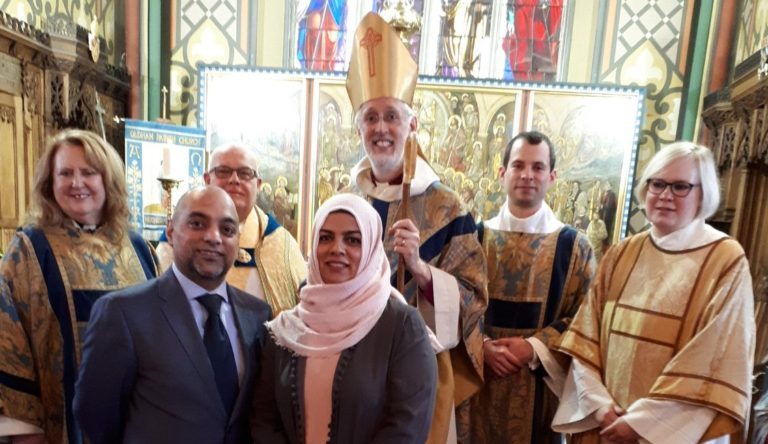
The celebration has had a huge turnout including esteemed guests of the Oldham Leadership, MP Jim McMahon, Cllr Javid Iqbal (Mayor of Oldham) Cllr Shaid Mushtaq Cllr Arooj Shah, also well attended by all the Community with representations from Oldham Parish Church, Street Angels, Oldham Food Bank, If Oldham, Hey With Zion (Lees) Darul Hadith Latifiya (Coppice), Oldham Mosque Council, Oldham Interfaith Forum were amongst the many that attended.

UKEFF have been humbled by the amount of supporting messages that they have had from well-wishers and sponsors.  The celebration included a few addresses by the Founders of UKEFF, the Minister of The Oldham Unitarian Church and The Chair of The Unitarian Church Oldham. MP Jim McMahon and the Mayor of Oldham both highlighted that UKEFF have definitely gone over and beyond any expectations within a short few years.

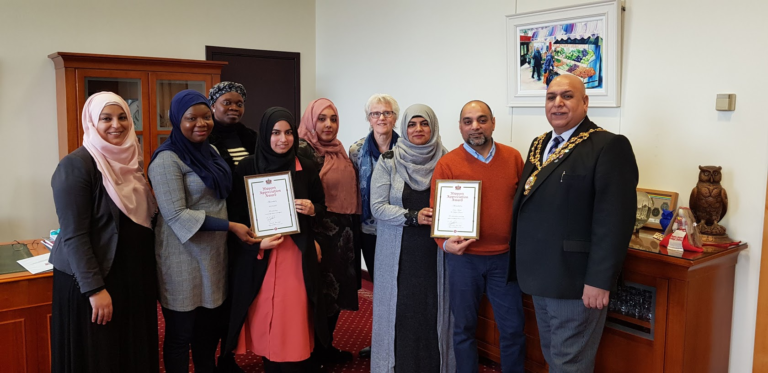
UKEFF also had a full on awards ceremony to recognise all their supporters, well-wishers, donors and Volunteers that have all made this possible, some of the people that have used the service in the past came to the program and expressed gratitude and support for UKEFF and called them “the family we needed when all other doors closed on us”.

UKEFF’s Co-Founder Nasim Ashraf Highlighted in their presentation that they are funded by the local community & local businesses and require your continuous support as we can achieve much more when we unite, than we can achieve when we sit divided, “What we do today, others will do tomorrow”

Whilst they were saddened by the increasing numbers of people who needed the service and the unprecedented stats that were presented, they are hopeful that if we all work together to serve humanity we can achieve a much needed and lasting change.

If you would like to get involved with UKEFF please contact them on enquiries@ukeff.org or visit the website on ukeff.org today.

You can also watch the video on our you tube Chanel here, please do like and subscribe to stay in touch

[envira-gallery id=”2271″]


FoodHub

Revealing UK Muslims’ generosity during Ramadan | ITV News

The generosity of Muslims gets noticed on National TV and UKEFF has a mention, highlighting the work that has been going on within Oldham

Click here to view the full program.


Christmas-Day-Homeless-Dinner-2018-768×543

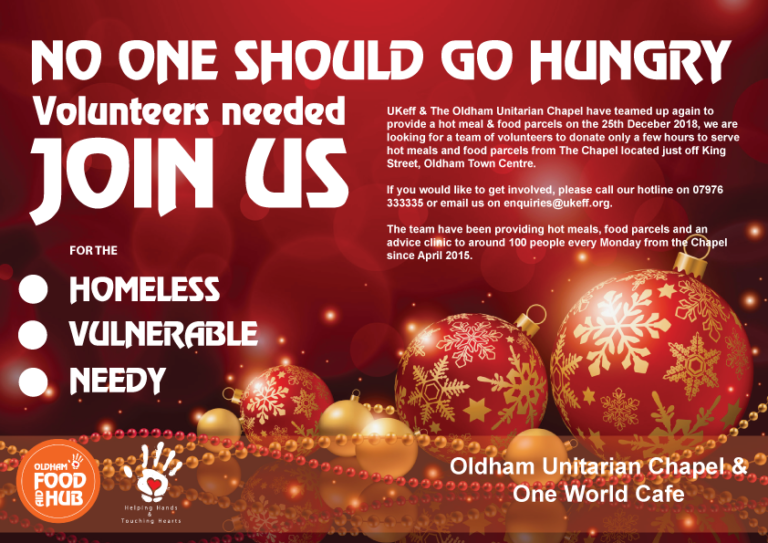
UKEFF to reach out on Christmas Day again

The UK Education and Faith Foundation (UKEFF) – a small local small charity which operates from the Unitarian Chapel in Oldham every Monday – is once again hosting its free Christmas meal offer on Christmas Day.

For the fifth year running, the meal will have the usual trimmings of Christmas turkey, puddings and roast potatoes, as well as a curry and rice option.

As usual the UKEFF team of passionate volunteers –  recently saluted at the House of Lords for becoming the fourth emergency service of Oldham – will be delivering a five-star service to all the people that will be joining them again this year.

Christmas can be a very lonely and cold time for those who reside within the area and have little or nothing to live on.

This year is set to be the worst in the whole of the UK and food banks are struggling to cope with the demands already.

UKEFF already serve anywhere between 70 to 180 people every Monday and do not expect anything less on Christmas day.

If you would like to hang up your stockings and give back some time to the deserving community of Oldham, then please pop along at 11am to the Oldham Unitarian Chapel off King Street roundabout in Oldham.

UKEFF volunteers will only be too happy to help.

Oldham has a huge number of people living below the poverty line.

As Muslims who run the charity, UKEFF volunteers don’t believe their neighbours should be going hungry, let alone homeless.

They make it their mission to help and assist anyone who is needy without the need for a referral.

For more information about what UKEFF does, please visit the website at: ukeff.org or email: enquiries@ukeff.org

Alternatively just pop into the Oldham Food Aid Hub at the Chapel every Monday between 10am and 1pm.